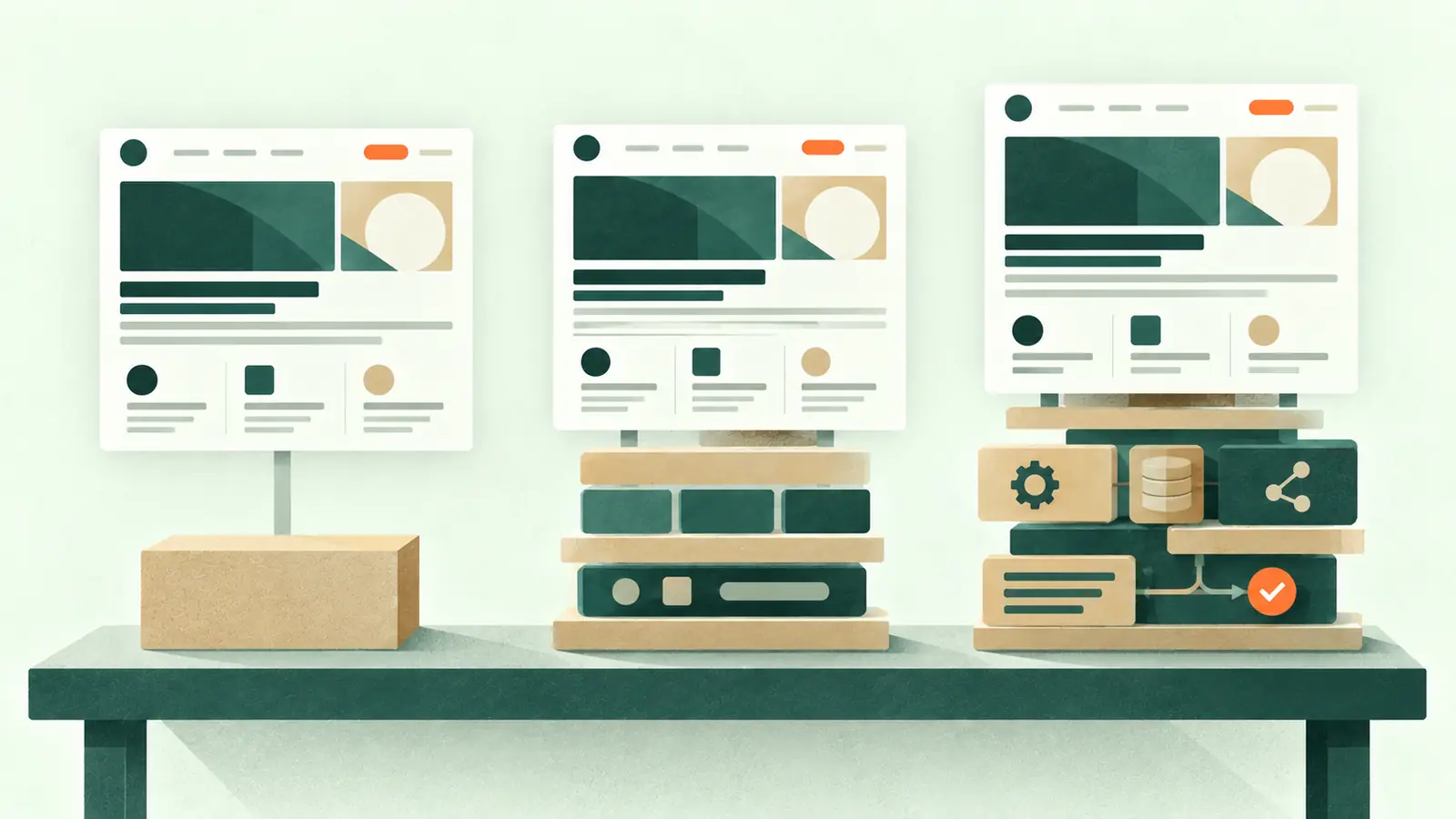
The honest answer is that a small-business website in Ireland can cost from roughly €600 at the very lean end to €10,000 or more for substantial custom work. That range is so wide that it is almost useless without understanding what is being bought.
A five-page site assembled from an established template is not the same product as a site developed after research, content planning, custom design, copywriting, accessibility work and integration with business systems. Both may be described as “a professional website”. The work inside the phrase is what changes the price.
This guide uses publicly advertised Irish prices and pricing articles checked in September 2026. It is a market sample, not an official national average, and individual quotes will vary.
A practical view of current Irish price bands
At the lower end, public offers for a landing page or simple brochure site begin around €700–€1,000. Grange Web Design says a landing page can start at €700 and a simple site may be around €1,000. Arrow Design gives a €695–€1,500 range for a small brochure or starter site.
That band can be entirely appropriate for a new sole trader who has clear content, modest requirements and more need for credibility than complex lead generation. It will normally depend on an existing design system or template and a tightly controlled scope.
For a more developed professional small-business website, several Irish sources cluster broadly between €1,500 and €7,500. Arrow Design lists €1,500–€3,500 for a professional business website. Egg Design gives €2,000–€7,000 as an indicative range for a standard website in Ireland and Europe. MEANit suggests €1,500–€7,500 for a professionally designed Irish site, depending on pages, design, SEO and other requirements.
Custom agency work can move beyond this. A recent 2Cubed guide distinguishes freelancer brochure-site quotes of roughly €699–€1,999 from boutique-agency work that can reach €8,000–€15,000 for apparently similar page counts. These figures are not proof that one supplier is cheap or another expensive; they reveal how little page count alone tells you.
For regional context, Digital Drive in Northern Ireland lists £1,500–£3,000 for entry-level professional work, £3,000–£6,000 for a professional custom site and £6,000–£12,000 for premium custom work. Sterling figures should not be blended directly into a Republic of Ireland average, but the underlying tiers and cost drivers are recognisably similar.
What is normally included at each level?
There is no universal package, but the following is a useful way to interpret quotes.
Around €600–€1,500: a contained starter site
Expect a small number of pages, an existing template or design framework, mobile responsiveness, a contact form and basic technical setup. You may be expected to provide finished copy, branding and suitable images.
Ask whether the price includes domain and hosting setup, privacy/cookie configuration, analytics, search-engine submission, revisions and training. “SEO included” may mean sensible titles and crawlable pages, not research or an ongoing search strategy.
Around €1,500–€4,000: a professional small-business build
This range can allow more discovery, content planning, tailored design, help with writing, stronger on-page SEO and attention to how visitors move from a service page to an enquiry.
It may also include reusable templates for articles or case studies, better performance work and connections to booking, email or customer-management services. The important question is not how many features are listed, but whether the process addresses the business problem.
Around €4,000–€10,000-plus: custom design or greater complexity
The price rises when the site requires detailed strategy, original interface design, extensive content, ecommerce, membership, booking logic, complex forms, custom data, multilingual content or third-party integrations.
There is also more testing. A service business taking simple enquiries has a shorter risk list than a shop processing payments, stock, tax and delivery rules. A polished ten-page brochure site can cost more than a larger template site when the work includes research, copy, photography direction and custom design.
The main things that change a quote
Strategy and user experience
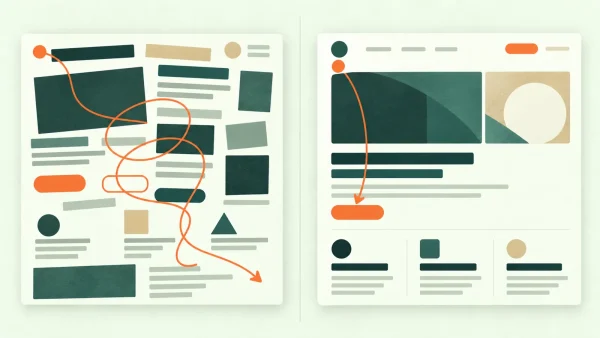
Planning who the site is for, what they need to understand and what should happen next takes time. It can also prevent expensive pages being built for no clear reason.
Content
Moving supplied text into a layout is different from interviewing the owner, researching the market, shaping the proposition and writing every page. Content delays are also a common reason projects overrun, so a clear responsibility here matters.
Design originality
Adapting a tested framework is usually quicker than creating a custom visual system. Neither method is automatically better. A restrained template used intelligently can outperform an expensive bespoke design that ignores the visitor.
Functionality and integrations
Booking, payments, product catalogues, filters, member areas, CRM connections and advanced forms add implementation and testing. Even an apparently simple integration can involve account setup, data mapping, error handling and privacy decisions.
Accessibility, performance and quality assurance
Responsive testing, keyboard checks, contrast, form behaviour, image optimisation and browser testing are part of a robust build. They are less visible in a proposal than a slideshow, but generally more important.
Photography and brand work
If the logo, colour system, writing or photographs are not ready, somebody must create them. Confirm whether that work is included, separate or outside scope.
Support after launch
A handover video and a week of snag fixes are not the same as ongoing security updates, backups, content changes and design improvements. Compare the period and the response commitment, not just the monthly number.
Price also reflects what you own and control
Two quotes can look similar until ownership and access are examined. A business should know who controls the domain, hosting account, WordPress administrator access, analytics, email services and any paid software licences. These details rarely appear in a homepage screenshot, but they determine how easily the site can be maintained or moved later.
Ask whether the price includes editable source files, reusable design assets, image licences and the right to use commissioned copy or photography. With WordPress, clarify whether important functionality depends on agency-owned licences that stop receiving updates when the relationship ends. That arrangement is not automatically unreasonable, especially within a care plan, but it should be visible before the quote is accepted.
Handover has a cost because useful independence takes work. Somebody must document the setup, organise accounts, provide sensible permissions and explain the parts the owner is expected to manage. A cheaper project that leaves the business unable to update a phone number or identify where its domain is registered may prove expensive at the first change of supplier.
Control does not mean every owner must maintain the site personally. It means the business can make an informed choice about who does the work and is not trapped by missing credentials or an opaque proprietary arrangement.
Your own time belongs in the budget
The invoice is not the only project cost. A low-priced build may rely on the client supplying final copy, selecting photographs, defining the page structure and checking every detail. That can be perfectly sensible for an organised owner with time and confidence. For somebody already stretched, it may cause months of delay.
A more expensive proposal may include interviews, content planning, copy support, image sourcing and structured review. Part of the price is paying another person to move the project forward and turn incomplete knowledge into usable decisions.
When comparing approaches, be realistic about internal time. Who will gather service information, approve wording, locate legal details and respond to questions? What work will be postponed while that happens? A website that costs less but never reaches a credible launch is not the economical option.
One-off project or monthly website plan?
A conventional project usually has a larger initial fee. After launch, hosting and care are charged separately, or the client takes responsibility for them.
A monthly model spreads the investment and can combine the initial build with continued attention. My own website pricing currently begins at €150 per month with a 12-month commitment. That includes hosting, monthly security and plugin updates, ongoing content changes, incremental design work and a yearly refresh or redesign.
At the starting price, the first-year commitment is €1,800. That is not simply a €1,800 build paid in instalments: the model includes ongoing services as well. Equally, it is a continuing relationship rather than a site handed over after one invoice. Which structure is better depends on cash flow, how much support you want and whether the site is expected to evolve.
When comparing a monthly plan with a project quote, calculate the full commitment and list everything included over that period. Check ownership, cancellation terms, domain control, content portability and what happens to the site when the agreement ends.
How to compare quotes properly
Give each supplier the same written brief, then compare:
- The business goals and audiences they have understood.
- The pages, content types and features actually included.
- Who supplies or writes the copy and images.
- The number and purpose of revision stages.
- Mobile, accessibility, performance and browser testing.
- SEO deliverables stated in specific terms.
- Analytics, forms and integrations.
- Hosting, backups, security and update responsibilities.
- Training, warranty and ongoing support.
- VAT and any third-party subscription costs.
- Ownership and the process for moving elsewhere later.
An unusually low quote may be good value because the provider has an efficient system and the scope is genuinely modest. It may also omit work you assumed was included. An expensive quote may reflect strategic and technical depth—or merely a larger overhead. Ask enough questions to find out.
What should your business spend?
Spend in proportion to the job the website needs to do.
If you are testing a new service and need a credible place to send referrals, a contained starter site may be sensible. If the business is established and one well-matched enquiry is worth thousands of euro, investing in clearer positioning, proof and a considered journey can be rational. If the site must run transactions or business processes, price it as operational infrastructure rather than a digital leaflet.
The best quote is not automatically the cheapest, and the best website is not the one with the most features. It is the one whose scope is clear, whose costs you understand and whose design is appropriate to the value and risk of the decision your customer is making.
If you would like to compare a proposed website against a transparent monthly alternative, see what to expect when working with me or contact me. A useful first conversation should clarify what you need before it attempts to sell you more of it.
Sources and price references
- Website design prices — Studio93
- Website development costs in Ireland — Arrow Design
- Average cost of a web designer — Egg Design
- Website design cost — MEANit
- Web design prices in Ireland — 2Cubed
- Web design prices in Ireland 2026 — Grange Web Design
- How much does a website cost in Northern Ireland in 2026? — Digital Drive
Important note
This article provides general information and professional commentary. It is not advice tailored to your particular business, website or circumstances, and it should not be treated as legal, financial, privacy, accessibility, cybersecurity or other specialist advice. Any opinions are my own professional judgement based on the information available when the article was researched.
Products, prices, services, software and official guidance can change. External links are provided for reference; I do not control third-party websites and cannot guarantee their continuing availability, accuracy or content. A link does not imply endorsement of everything published by that source.
Check current official information before making an important decision. Test technical changes safely, keep a verified backup, and obtain appropriately qualified advice where the consequences warrant it. Any sponsorship, free product, affiliate link or other commercial relationship relevant to the article will be clearly disclosed.